Condition
Vertebral compression fractures
Compression fractures of the vertebrae are common in older adults, especially women with osteoporosis. They are very painful at first, but most patients recover relatively quickly. Kyphoplasty is an option when significant pain lasts.
In plain language
A vertebral compression fracture is a break in one of the bones of the spine in which the front of the vertebra collapses. It is the most common complication of osteoporosis and is seen most often in older adults. Women are more likely to have these fractures.
The details
01Symptoms
- Sudden, often severe back pain at the level of the fracture.
- When several vertebrae in the mid-back are fractured, a stooped-over posture (kyphosis) can develop and lead to long-term mid-back and low back pain and fatigue.
- Rarely, weakness or numbness in the legs, or changes in bowel or bladder function.
02Causes
Weakened bone from osteoporosis. The fracture does not only happen after a fall; it can occur during everyday activities such as coughing or getting out of bed.
03What the imaging shows
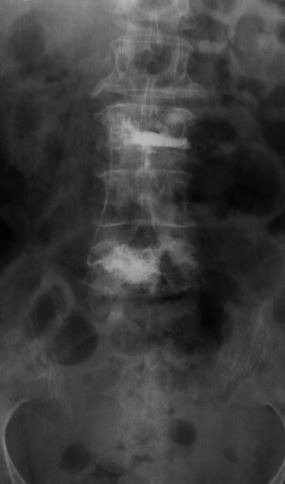
X-ray after kyphoplasty, with cement in two vertebrae.
A fractured vertebra is compressed in the front and loses its usual square or rectangular shape. The fracture is diagnosed with X-rays, plus an MRI to tell whether the fracture is new.
04Treatment options
Initial care
Although the fractures are very painful at first, most patients have a relatively quick recovery. Initial treatment may include:
- A few days of bed rest.
- A brace.
- Pain medication.
- Calcitonin and other medications, depending on the location and severity of the fracture.
Kyphoplasty
If the fracture still causes significant pain about 2 to 3 weeks after the injury, kyphoplasty may be appropriate. This minimally invasive procedure uses a balloon to lift the collapsed vertebra back toward its normal shape, then fills the space with cement. The average patient has quick pain relief and is usually able to return to normal daily activities within a few days.
05When to see a spine surgeon
- Back pain that is still significant 2 to 3 weeks after a fracture.
- Urgently if you develop weakness or numbness in the legs, or bowel or bladder problems. In these rare cases rapid surgical treatment is absolutely necessary. Call 911 or go to the nearest emergency room.
See also red flags: when not to wait.
Frequently asked questions
01Can a compression fracture happen without a fall?
Yes. These fractures do not only happen after falls. They can occur during everyday activities such as coughing or getting out of bed.
02When is kyphoplasty considered?
If the fracture continues to cause significant pain about 2 to 3 weeks after the injury, kyphoplasty may be appropriate.
03Is a compression fracture ever an emergency?
Rarely. If the fracture causes weakness or numbness in the legs, or affects bowel or bladder function, rapid surgical treatment is necessary. This is exceedingly rare.
Related procedures & care
Information is general and not a substitute for medical advice.