Blog
Awake endoscopic discectomy: what the day looks like
In an awake endoscopic discectomy, a herniated disc is removed through a small incision while you stay relaxed under light sedation with local anesthesia. You can talk with Dr. Hannani during the procedure, and most patients go home the same day.
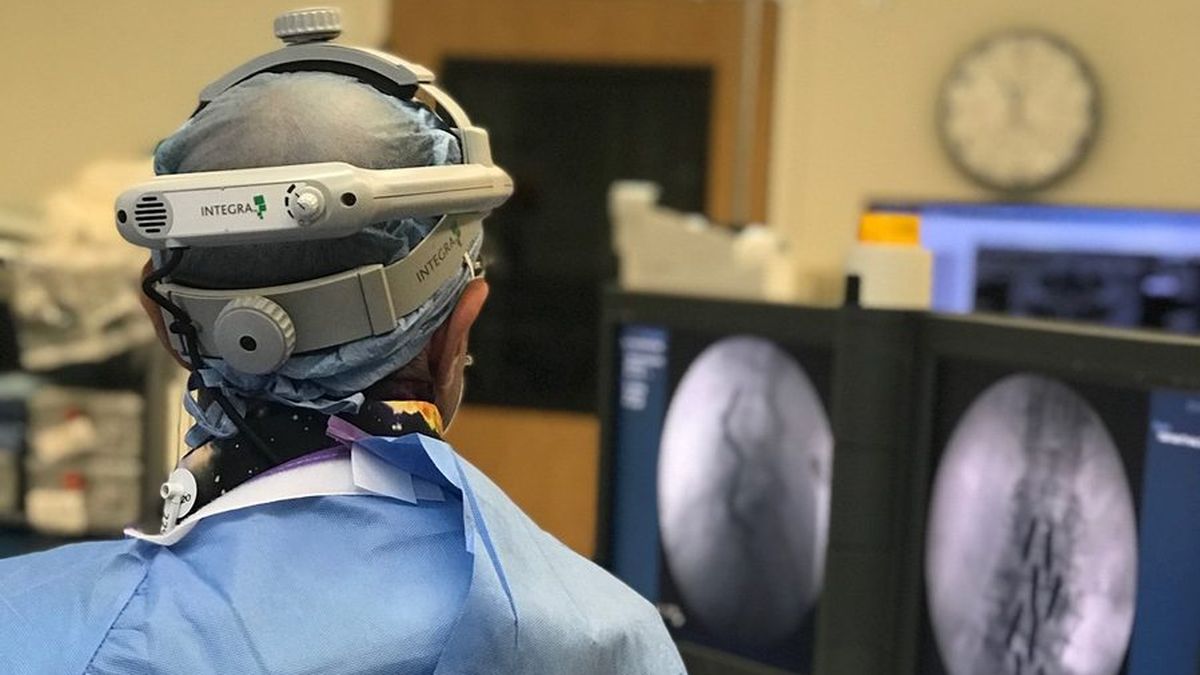
"Will I be awake?" is one of the first questions people ask about endoscopic disc surgery. With Dr. Hannani, the answer is yes, but comfortably so. The procedure is done under light sedation with local anesthesia. You stay relaxed, the area being treated is numb, and you can talk with Dr. Hannani the whole time.
Here is a plain-language walk-through of what the day generally looks like. Your own instructions will come from the office before your procedure.
First, is this the right surgery?
Most herniated discs get better on their own with time, therapy, medications or injections. Surgery is considered only when leg pain or sciatica does not improve with those treatments, or when there are warning signs such as growing weakness.
Endoscopic discectomy is not right for every herniation. Depending on the type and location of the herniation on your MRI, it may be as successful as open surgery. Because it is much less invasive, it may be the best option to try before more extensive open surgery. Dr. Hannani reviews your MRI and exam to decide which approach fits.
Before the procedure
Before surgery, our office will give you specific instructions about eating, medications and arranging a ride home.
On the day of surgery, you check in, meet the team and have an IV placed so medicine for light sedation can be given.
During the procedure: awake, relaxed and talking
This is what makes the awake approach different:
- Light sedation. Medicine through your IV helps you feel calm and relaxed. You are not put fully to sleep.
- Local anesthesia. The skin and deeper tissues where the instruments go are numbed, much like a dentist numbs a tooth before dental work.
- You can talk with Dr. Hannani. Because you are awake, you can tell him what you feel during the procedure. Research on endoscopic discectomy notes that this kind of feedback during surgery is one of the safety advantages of using local anesthesia.
- A very small incision. The procedure is done through an incision of about 1/4 inch.
- A scope and camera. Similar to knee arthroscopy, a thin scope with a camera shows the disc on a screen. A fine tissue grasper is guided in to remove the herniated piece pressing on the nerve. This approach is designed to avoid removing normal muscle, bone and ligament.
Many patients notice their leg pain ease while they are still on the table, and they can confirm that relief with Dr. Hannani right then. Results depend on the type of herniation, and not everyone feels the same.
A 2022 study comparing local anesthesia alone with local anesthesia plus conscious sedation for this kind of surgery found that adding sedation made the experience more comfortable, with similar results after surgery.
After the procedure
- Going home. Patients can usually go home the same day, often within a few hours.
- Pain relief. Leg pain relief is usually immediate, though some soreness at the small incision is normal.
- Daily activities. Most daily activities can be resumed without a long delay.
Dr. Hannani will go over activity and return-to-work guidance with you based on your situation.
Risks to know about
Every spine surgery, however small, carries real risks. These include infection, bleeding, nerve injury, a herniation that comes back, the need for another operation and, rarely, serious medical complications. Dr. Hannani goes over the risks and benefits for your situation before any procedure. See the full list of significant risks.
What this means for you
- You will not be fully asleep. Light sedation with local anesthesia keeps you comfortable and lets you talk with Dr. Hannani.
- The incision is small, about 1/4 inch, and normal muscle and bone are spared.
- Most patients go home the same day.
- Not every herniation can be treated this way. Your MRI is what decides.
Dr. Hannani is a fellowship-trained orthopedic spine surgeon and one of few spine surgeons who perform awake endoscopic surgery.
See if endoscopic discectomy fits your MRI
Send your MRI for a free MRI review. Dr. Hannani looks at the images himself and tells you whether endoscopic discectomy, another procedure or non-surgical care makes sense. You can also read more about endoscopic discectomy.
This article is for general education and is not medical advice.
Related procedures & care
Information is general and not a substitute for medical advice.