Blog
Adjacent Segment Degeneration: What Happens Next to a Fusion?
After a spinal fusion, the discs above and below can wear over time. Research helps explain how often this causes symptoms, and why motion-preserving disc replacement is an option for some patients.
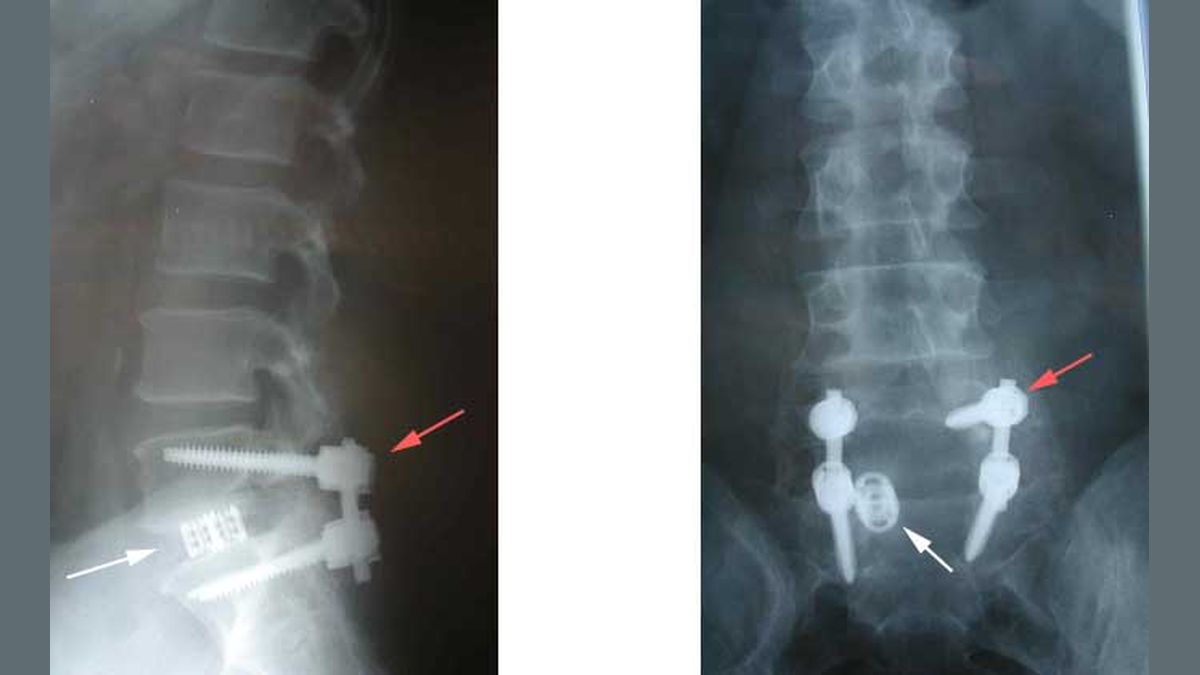
A spinal fusion joins two or more vertebrae so they heal into one solid bone. It can be an excellent way to relieve pain from an unstable or badly worn segment of the spine. But the spine is built to move, and when one segment stops moving, the levels next to it carry a bit more of the load.
Over the years, some people develop new wear at the disc just above or below a fusion. Doctors call this adjacent segment degeneration. When it causes symptoms such as pain, numbness or weakness, it is called adjacent segment disease.
What does the research show?
The best-known study on this topic followed 374 patients for up to 21 years after fusion surgery in the front of the neck. It found:
- New symptoms from an adjacent level appeared at a fairly steady rate of about 2.9% per year during the first ten years.
- By ten years, about one in four patients (25.6%) was predicted to develop new symptoms at a neighboring level.
- More than two-thirds of those patients eventually needed another operation.
The authors also found that the risk was highest when the level next to the fusion already showed wear on X-rays before surgery.
Is it caused by the fusion, or by aging?
This is an honest debate in spine surgery. There are two ideas, and both likely play a part:
- Extra stress. A fused level no longer moves, so nearby discs may bend more and wear faster.
- The natural course of arthritis. People who need a fusion often have wear-and-tear changes throughout the spine. Some of those other discs would have worn out with time anyway.
The authors of the long-term study believed much of the problem reflects ongoing arthritis. Even so, they said patients should be told about the real chance of new problems at a neighboring level over the long term.
Why disc replacement is discussed
For some people, an artificial disc is an alternative to fusion. The surgeon removes the damaged disc, just as in a fusion, but instead of fusing the bones together, places a device that is designed to keep the level moving.
The idea is simple: if the treated level keeps moving more naturally, the nearby discs may not have to work as hard.
What does the evidence say? A 2015 analysis of prospective studies on single-level neck surgery found that disc replacement was linked to fewer adjacent segment problems and fewer repeat operations than fusion. The authors also urged caution, because only eight studies were included and follow-up was limited. Other reviews have reached similar but not always statistically certain conclusions.
So the fair summary is this: disc replacement appears to lower the risk of adjacent level problems for the right patient, but it does not remove the risk entirely.
Who may be a candidate?
Disc replacement is not right for everyone. It is generally considered when:
- The problem is mainly the disc, often at one or two levels
- The spine is stable, without significant slippage
- The facet joints in the back of the spine are not badly arthritic
- Bone quality is good
A fusion may still be the better choice when there is instability, deformity, severe arthritis of the joints, or weak bones. Disc replacement is available for both the neck and the low back. In the low back it is done through the abdomen, avoiding a back incision.
What this means for you
- Adjacent segment degeneration is a real long-term consideration after spinal fusion, and you deserve an honest talk about it.
- Not everyone who has a fusion will have this problem, and many people do well for many years.
- If you are a good candidate, disc replacement is worth discussing because it preserves motion.
- The best choice depends on your anatomy, your imaging, and your goals, not on one technique fitting everyone.
Want to know your options?
Dr. Hannani offers both fusion and disc replacement and can explain which may fit you best. Have an MRI? Get a free review.
This article is for general education and is not medical advice.
Related procedures & care
Information is general and not a substitute for medical advice.