Endoscopic Spine Surgery in Los Angeles
Minimally invasive spine surgery through a single 8-millimeter incision — outpatient, faster recovery..
;
Endoscopic Minimally Invasive Spine Surgery
Endoscopic spine surgery is the most minimally invasive way to treat many of the same conditions that used to require open back surgery. Through a single incision smaller than a fingernail, Dr. Kambiz Hannani uses a high-definition camera and specialized instruments to remove disc fragments, decompress pinched nerves, and relieve pain — without cutting through back muscles, without large incisions, and in most cases without an overnight hospital stay. For the right patient in Los Angeles, endoscopic spine surgery means going home the same day, off heavy pain medication within days, and back to a desk job within a week or two.
What is Endoscopic Spine Surgery?
Endoscopic spine surgery is a category of ultra-minimally invasive procedures that use a thin tube (endoscope) with a camera and light source to access the spine through a single small puncture — typically 7 to 10 millimeters wide, about the size of a pencil eraser. The surgeon watches the procedure on a high-definition monitor and uses specialized micro-instruments passed through the same tube to do the actual work.
Compared with traditional open spine surgery (which uses a 4 to 6 inch incision and dissects through layers of muscle) or even microsurgery (which uses an operating microscope and a 1 to 2 inch incision), endoscopic surgery causes dramatically less tissue damage. Less tissue damage means less pain after surgery, less blood loss, lower infection risk, and a much faster recovery.
Common Endoscopic Procedures
Not every spine procedure can be done endoscopically — but the list of what can is growing every year. The most common endoscopic procedures Dr. Hannani performs include:
Endoscopic discectomy — removal of a herniated disc fragment compressing a nerve, in the lumbar (low back) or cervical (neck) spine
Endoscopic foraminotomy — opening up the bony tunnel where a nerve exits the spine, relieving pinched-nerve pain
Endoscopic laminotomy / decompression — relieving spinal canal narrowing (stenosis) without a large open laminectomy
Endoscopic rhizotomy — targeted treatment of facet joint nerves causing chronic back pain
Endoscopic vs. Open vs. Microsurgery: A Real Comparison
A patient with a typical lumbar herniated disc has three reasonable surgical options. Here is the practical difference:
Open discectomy — 3 to 4 inch incision, muscle dissection, often a hospital stay, 4 to 6 weeks before desk work, 8 to 12 weeks before heavy activity. Largely outdated for routine herniated discs.
Microdiscectomy — 1 inch incision, less muscle damage, usually outpatient, 1 to 2 weeks before desk work, 4 to 6 weeks before heavy activity. The most common modern option.
Endoscopic discectomy — 8 millimeter incision, almost no muscle damage, outpatient with same-day discharge, often back to desk work within a week, 3 to 4 weeks before heavy activity. The least invasive option.
For a single-level herniated disc in a healthy patient, the endoscopic approach gives outcomes equivalent to microdiscectomy with meaningfully faster recovery. For more complex spinal problems — multi-level stenosis, instability, prior failed surgery — open or fusion surgery may still be the right answer.
Who is a Candidate for Endoscopic Spine Surgery?
The best candidates generally have:
A clearly defined, single-level problem (one herniated disc, one pinched nerve, one stenotic level)
Imaging that matches the symptoms — leg pain in the L5 distribution with an L4-L5 disc herniation, for example
Failed at least 6 weeks of conservative care (physical therapy, medications, often an injection)
No significant spinal instability or major deformity
No history of major prior surgery at the same level (this can sometimes still be done — case-by-case)
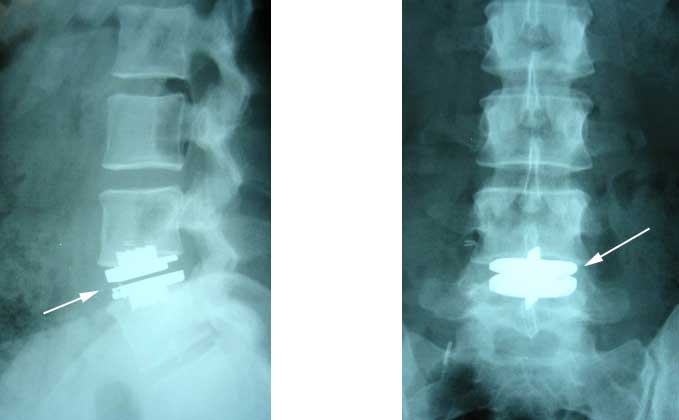
Patients who are not endoscopic candidates are not stuck — Dr. Hannani offers the full range of spine procedures, from microdiscectomy and decompression to artificial disc replacement and fusion. The right operation is the one matched to your specific problem.
What Recovery Looks Like
For a typical endoscopic lumbar discectomy at one of our LA-area surgery centers:
Day of surgery: 30 to 60 minute procedure under sedation or light general anesthesia. Walking within an hour. Discharged home the same day.
Days 1-3: Mild soreness around the small incision. Most patients off narcotics within 48 to 72 hours.
Week 1-2: Most patients return to a desk job. Driving usually permitted within a week (off narcotics).
Weeks 3-4: Light exercise, walking, gradual return to normal activity.
Weeks 6-12: Return to heavy lifting, sports, and physically demanding work.
Risks of Endoscopic Spine Surgery
No spine surgery is without risk. Endoscopic procedures share the same general risks as any spine surgery — infection, bleeding, nerve injury, dural tear (small leak of spinal fluid), and the possibility that symptoms do not fully resolve. The endoscopic technique generally has lower rates of these complications than open surgery because of the smaller working corridor and reduced tissue damage. The most common technical limitation is that some pathology turns out, intraoperatively, to need a slightly larger approach — Dr. Hannani will discuss this possibility honestly during your consultation.
Why Patients Across Los Angeles Choose Dr. Hannani
Endoscopic spine surgery requires specialized training and experience that many spine surgeons in Los Angeles do not have. Dr. Kambiz Hannani has performed minimally invasive spine procedures for over two decades and offers the full endoscopic spectrum from his West Covina practice. Patients travel to him from across Los Angeles County — Pasadena, Glendora, Arcadia, Covina, Diamond Bar, the San Gabriel Valley, the Westside, and Downtown LA — specifically because most local surgeons still default to open or microsurgical techniques and many patients prefer the faster recovery of an endoscopic approach.
Frequently Asked Questions
Is endoscopic spine surgery covered by insurance? Yes. Endoscopic procedures are billed under standard CPT codes and are covered by most major insurance plans in California, including Medicare, when medical necessity is documented. Our office handles pre-authorization on your behalf.
Will I be put under general anesthesia? Endoscopic procedures can often be performed under light sedation with local anesthesia, allowing for faster recovery from the anesthetic itself. General anesthesia remains an option for patient comfort or longer cases.
How long is the actual surgery? Most single-level endoscopic procedures take 30 to 90 minutes, depending on complexity.
Will I need physical therapy afterward? Most patients benefit from a short course of structured physical therapy starting 2 to 4 weeks after surgery. We will write the referral and coordinate with a PT clinic near your home.
What if my problem turns out to need more than endoscopic surgery? Dr. Hannani is fellowship-trained in the full range of spine surgery — from microdiscectomy to fusion to artificial disc replacement. If your problem is better served by a different approach, you will be told honestly before any procedure is scheduled.
How do I schedule a consultation? Call our office at 626-939-5900 or visit our contact page. Bring any prior MRI imaging on disc if you have it — this lets Dr. Hannani assess whether you are an endoscopic candidate at the first visit.